


MVM dynamic tariff: is it worth it with an electric car?
An average electric car on its own uses up the entire discounted electricity allowance. At 15,000 kilometres a year and a consumption of 18 kWh/100 km, that comes to roughly 2,700 kWh, while the residential discounted threshold is 2,523 kWh per year. In other words, before the fridge, the lights and the washing machine have even started, the car has already used up the allowance, and from then on every kWh costs twice as much.
This expensive upper tier is exactly what MVM's new dynamic electricity tariff, the D tariff, replaces. It can be requested from 1 September 2026. On the Voltie blog we regularly work out the real costs of driving electric. In this article we look at how the D tariff works, who it pays off for, which conditions and deadlines apply, and what your charger needs to be able to do for the tariff to actually be cheaper.

The D tariff is a two-tier price structure: up to the discounted threshold you pay the same fixed, discounted A1 price as before (about HUF 36/kWh gross), but above the threshold today's fixed residential market price of about HUF 70.1/kWh is replaced by a variable price that follows the market.
● Discounted threshold: 2,523 kWh/year for households, 4,606 kWh/year for micro-enterprises.
● Up to the threshold: nothing changes, you keep the fixed discounted A1 price.
● Above the threshold: a market-based D unit price, based on the HUPX exchange price assigned to your consumption in each quarter hour, converted to forints at the MNB mid-market rate.
An important difference compared with the old day and night logic: there are no time bands, just a continuously moving price curve. The price of two consecutive quarter hours can differ significantly. According to MVM's own example, in a month with 1,000 kWh, if 207 kWh falls within the discounted band, that part is billed at the A1 price and the remaining 793 kWh at an individual, market-based unit price.
The tariff can be requested from 1 September 2026, but it takes effect on 1 January 2027 at the earliest. If you would like to know more about the basics of electricity prices, read our earlier article on how much 1 kWh of electricity costs in Hungary.
The D tariff is for those who exceed the threshold and can shift a significant part of their consumption to the cheap hours. MVM itself cites EV chargers and air conditioners as typical examples.
● EV owners with a home charger: the best case. Large but freely schedulable consumption, well above the threshold.
● Homes with a heat pump or air conditioning: usually worth it, because part of the consumption can be scheduled.
● Solar, with gross metering: worth a look, because during the day your own generation covers your consumption.
● Solar, with net metering: not eligible, a net-metered household power plant (HMKE) is an exclusion criterion.
● Low-consumption households: usually not. Below the threshold nothing changes, you only take on the risk.
The car is not just a large consumer, it is also a patient one. You switch on the oven when you need it, but you plug in the car in the evening and it only has to be charged by the morning. When it actually charges in between makes no difference at all. This flexibility is what the dynamic tariff rewards.
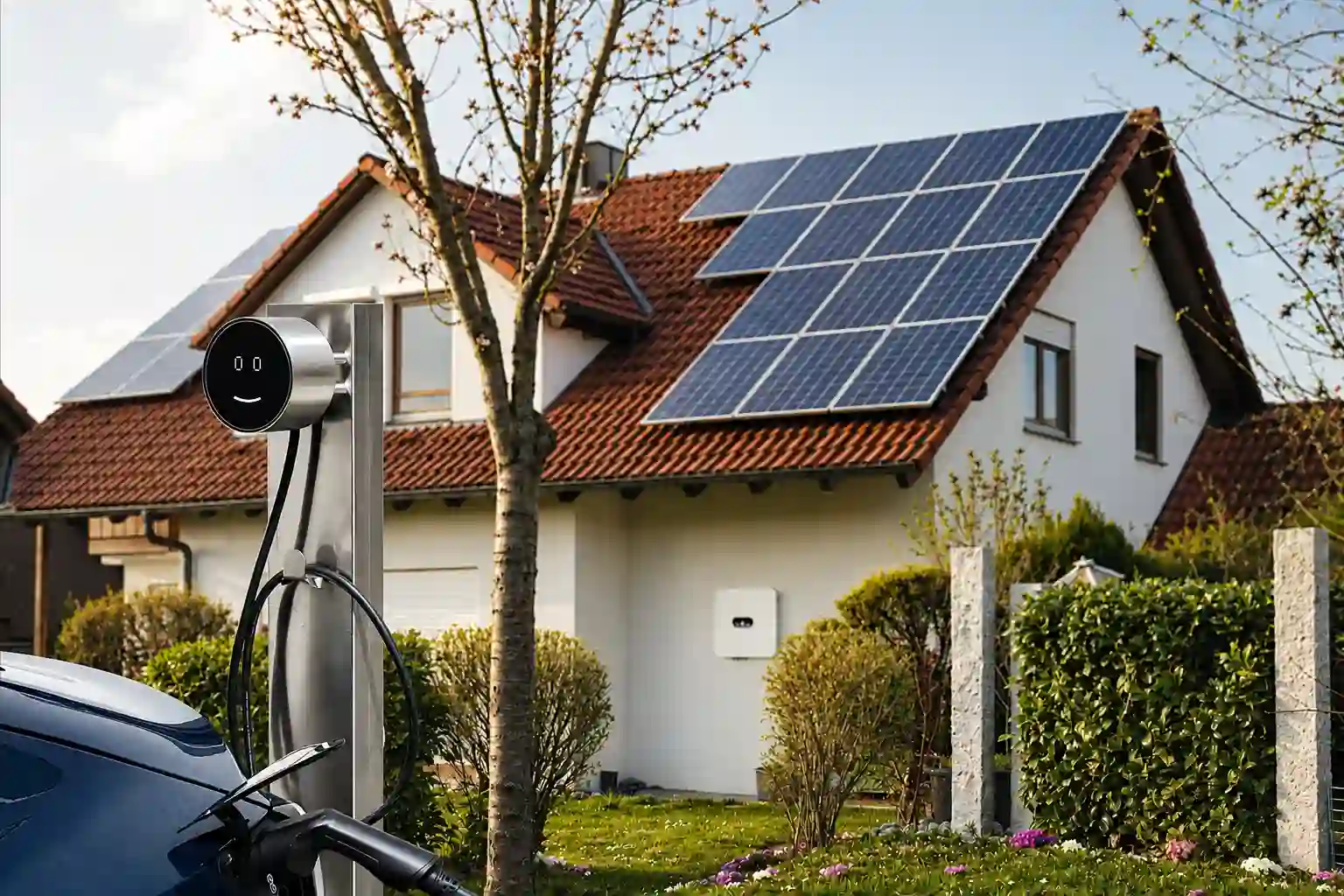
All of the following must apply: you are supplied under universal service, you have an A1 metering point, a remotely readable monthly time-series meter (smart meter) is installed, and if you have a household-sized power plant, it is not on net metering. Exclusion criteria are a prepayment meter, a discount under GKM Decree 116/2007, a net-metered HMKE, overdue debt and a temporary connection.
Deadlines. The tariff can start on 1 January 2027 at the earliest, even if you submit your request today. If you apply by 15 November 2026, it takes effect on 1 January. After that, MVM's general rule applies: a request submitted by the 15th of a month takes effect on the 1st of the second following month, and one submitted after the 15th on the 1st of the third following month. A December request therefore only takes effect on 1 February or 1 March. You can apply through MVM's online customer service, and if you switch back to the universal tariff, you cannot choose the D tariff again at the same point of consumption within 12 months.
And here is the catch: for this to work, the charger has to do the job on its own. If you have to decide every evening when charging should start, you will forget after a few weeks, and the advantage of the tariff melts away. Four capabilities matter.
● Scheduled charging: in the Voltie app you set when charging should start and how long it should last, and the rest is automatic. On top of that there is the battery-saving mode (for example, stopping at 80 percent) and amount-based charging if you only need a specific number of kWh.
● Dynamic Load Management (DLM): if charging shifts to the cheap late-evening hours, it can easily coincide with the dishwasher or the heat pump. Per-phase DLM always charges with the free capacity only, so the main fuse does not trip and there is no need to upgrade your grid connection. This requires an external smart meter.
● Solar modes: with gross metering, the cheapest kWh is still your own. Green mode charges purely from solar surplus, Eco mode starts from an adjustable feed-in level, and InverterGuard starts charging if the grid voltage would rise above an adjustable level and cause your inverter to shut down.
● Measurement and integration: on a dynamic tariff, statistics are not a luxury, they are the only way to decide whether you made the right choice. The app shows the energy charged, the time, the cost and the CO2 savings in weekly, monthly and yearly views, with Excel export. If you want to go further, see our smart home page: alongside OCPP 1.6J, HTTP API v4 and Modbus, there are ready-made integrations with Home Assistant, Loxone and the open-source EVCC charge controller, which can even control charging based on the daily exchange price curve.
A dynamic tariff is not only an opportunity but also a risk. Four things are worth thinking through.
● The price moves upwards too. When market prices are high, consumption above the threshold can cost more than today's fixed price.
● The evening peak is expensive. Anyone who charges between 6 pm and 9 pm may end up worse off than before.
● Exchange rate risk. HUPX prices are converted to forints at the MNB mid-market rate.
● One-year commitment. Because of the 12-month restriction, it is worth doing the maths with your own consumption in advance.
The logic is simple: in exchange for your flexibility, you get a lower price. The only question is whose job this flexibility is. If you have to keep an eye on it every evening, it will not work. If the charger takes care of it, the electric car turns from the consumer that uses up the discounted allowance into the one that makes use of the cheapest hours.
Before you apply for the D tariff, look at your own numbers: how much you consume per year, how much of that is the car, and when you can actually charge. If you need help with this, take a look around the Voltie website or read the frequently asked questions.
👉 Take a look around: