


What does the structure of an electric car battery look like?

The complexity and technological advancement of batteries depend on numerous factors. You can read more about this and related charging information in several useful and interesting articles on our blog. In this post, we will introduce some important things that you may want to know about them, while also touching on the operation of the batteries alongside their structure.
The structure of an electric car battery: what is a battery cell?
The structure of an electric car battery is less complicated than it might seem at first glance. Each battery consists of three parts: battery cells, modules, and the battery pack. Among these, the cells are considered the most important element.
Within them, there is always a positive electrode made of lithium or another metal oxide and a negative electrode made of carbon. During charging, current flows through the cells, and lithium ions move from the negative electrode to the positive electrode. While in use, these ions migrate back to the negative electrode, releasing the energy that powers the electric motor.
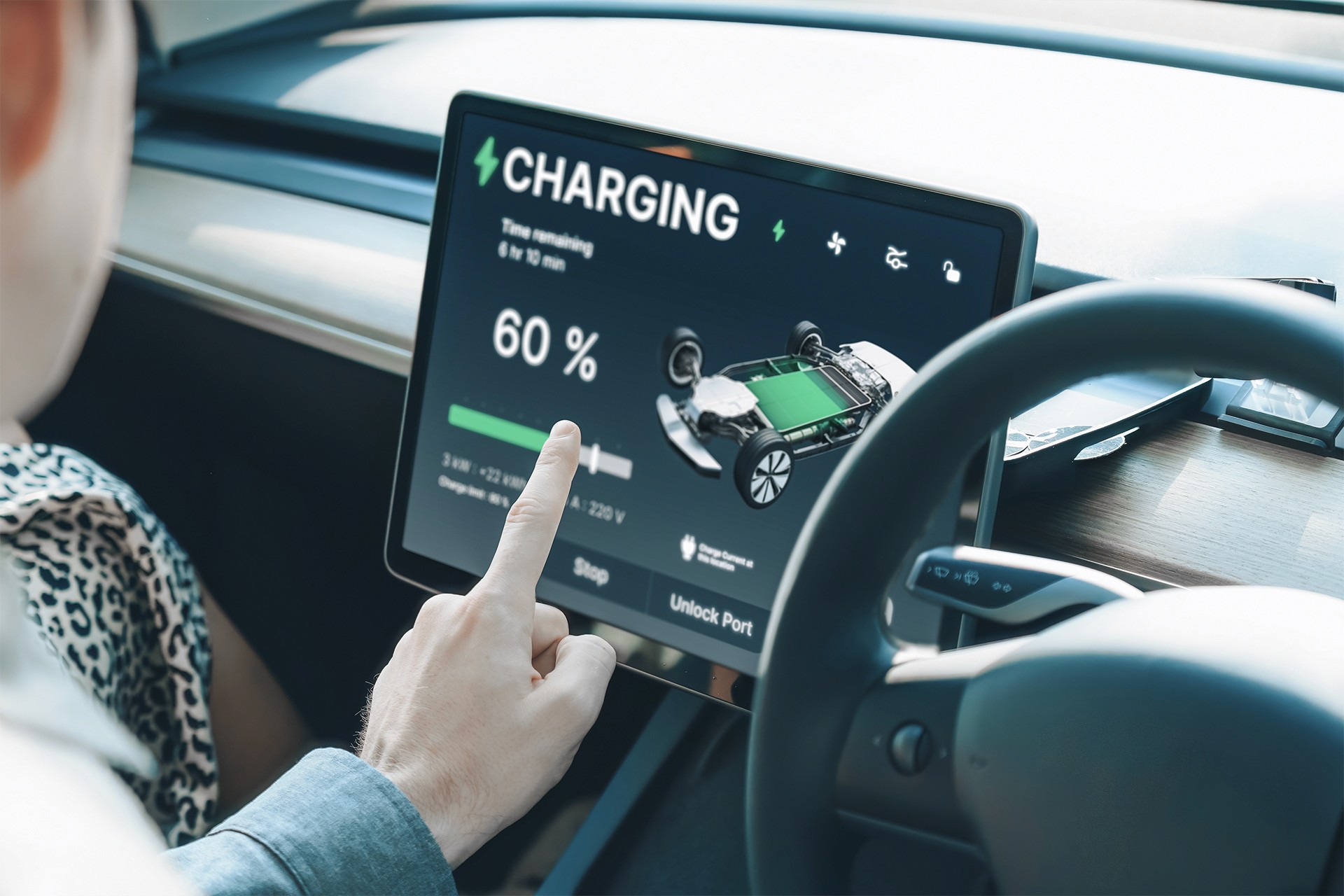
What is worth knowing about battery modules?
Thanks to the series and parallel connection of hundreds of cells, different capacity and voltage modules are created. These provide structural protection for the cells and enable easier handling and maintenance.
This is why the batteries of electric cars are generally large and heavy. These solutions are designed to store as much energy as possible for efficient operation. Different types of vehicles will generally require different sizes and designs of solutions.
What type of battery does an electric car need?
From the structure, it is clear that an electric car requires a completely different type of battery than a conventional vehicle. Manufacturers most commonly use lithium-ion batteries. These models are characterized by high energy density. This determines how much energy a device of a given size and volume can store.
A higher energy density ensures a longer range. As a result, they perform well even at high temperatures, and their discharge rate is low.
For certain types of electric cars, lead-acid or nickel-metal hybrid batteries can also be used. However, these generally have lower energy density, are heavier, and their manufacturing process is less environmentally friendly.
👉 Take a look around:
What is the expected lifespan?
The lifespan of an electric vehicle battery depends on many factors. Among other things, it depends on the conditions and climate in which it is used. It also depends on how often and by what method it is charged. It is worth knowing that over time the range of even the best batteries may decrease, however, with proper use and charging, this should not pose a problem for many years.
By using our Voltie chargers, we can effectively optimize and monitor every step of the charging process. This is not only an energy-efficient and effective solution, but it also helps to extend the lifespan of the batteries.
What is the expected lifespan?
The lifespan of an electric vehicle battery depends on many factors. Among other things, it depends on the conditions and climate in which it is used. It also depends on how often and by what method it is charged. It is worth knowing that over time the range of even the best batteries may decrease, however, with proper use and charging, this should not pose a problem for many years.
By using our Voltie chargers, we can effectively optimize and monitor every step of the charging process. This is not only an energy-efficient and effective solution, but it also helps to extend the lifespan of the batteries.