

Electric vehicle charging cable types – which one should you choose?
Did you know that at most public charging stations you have to use your own cable, and if you don't bring the right type, you simply won't be able to charge? This is one of the most common surprises that new electric car owners run into. Understanding electric car charging cable types is not only useful, but almost essential if you don't want to park with a dead battery next to a charging station.
On the Voltie blog, we regularly address the everyday questions of electric motoring. In this article, we run through the most important charging cable types so you can make a confident decision – whether you are buying an electric car now, or already have one but haven't yet fully figured out the connectors.
If you are browsing charging cables for electric cars, the first question is almost always: "Do I need a Type 1 or Type 2 cable?" The answer depends on your car model.
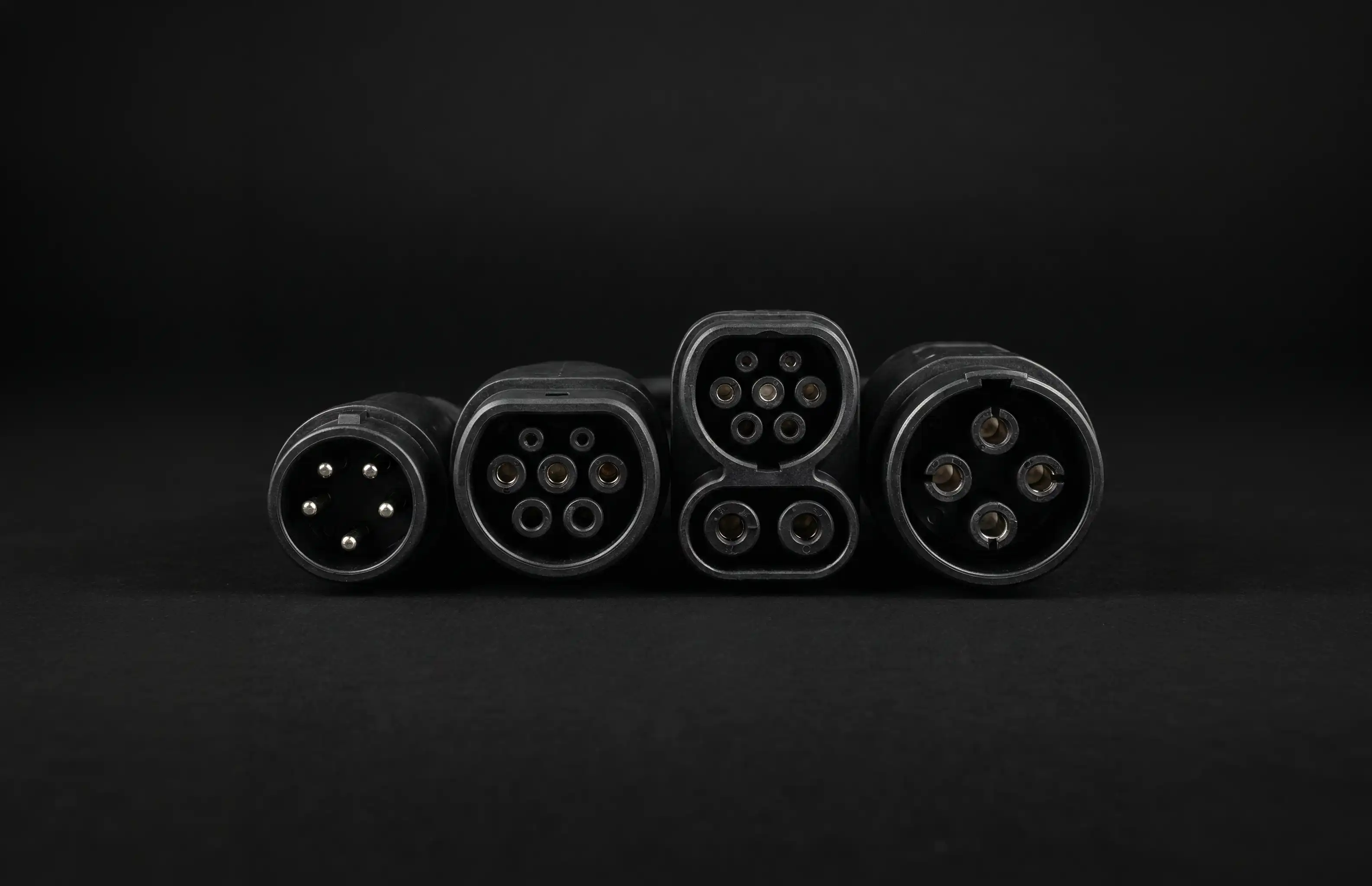
● Type 1 (J1772): A single-phase connector, mainly used for cars manufactured in Asia and North America. Examples include the early Nissan Leaf or the Mitsubishi Outlander PHEV. It is increasingly rare in Europe.
● Type 2 (Mennekes): This is the European standard, and most new cars support it – whether it is a Renault Zoe, VW ID.4, or Tesla Model 3. It comes in both single-phase and three-phase versions, with the latter enabling faster charging.
If you are buying an electric car in Hungary or the EU now, you will almost certainly encounter a Type 2 connector – which is also compatible with most public AC chargers. Data from the European Alternative Fuels Observatory confirms that Type 2 is the dominant standard across Europe today.
For DC fast chargers (rapid chargers), you do not need to bring your own cable – the charging station has a built-in cable. There are two main standards:
● CCS (Combined Charging System): An extended version of the Type 2 connector with two extra DC pins. Most new European and American cars support this. Its power output can range between 50 and 350 kW.
● CHAdeMO: A Japanese standard mainly used by Nissan and Mitsubishi models. In Europe, it is increasingly being phased out in favor of CCS, but it can still be found at many charging stations.
Most newly registered electric cars already support CCS-standard fast charging – it is worth paying attention to this when purchasing if the option of fast charging on the go is important to you.
To understand charging cable types, it is also important to know that there are two charging modes: alternating current (AC) and direct current (DC). These require different connectors and cables.
AC charging is the most common home and public charging method. Voltie's home wall chargers and most public charging stations use alternating current. This requires a Type 1 or Type 2 cable. This form of charging is slower but gentler on the battery – ideal for overnight charging at home. You can read more about charging habits and home solutions in our article on charger types.
It makes a difference whether you want to charge at home or on the go – the required cables are also different.
● Home charging: Most wall chargers come with a built-in cable, so you don't need to carry one separately.
● Public AC charging station: These usually do not have their own cable – you need to connect your own Type 2 cable. It is highly recommended always to keep a three-phase, 22 kW Type 2 cable in the trunk.
● DC fast charger: The charging station has its own built-in CCS or CHAdeMO cable – you don't need a separate cable.
● Portable charging cable (for 230 V socket): This is an emergency solution if there is no wallbox or public charger nearby. Slow, but better than nothing.
Your car's connector type, battery capacity, and charging habits together determine exactly what type of cable you need. If you want to make the right decision, the Voltie team is happy to help you find the appropriate solution.
👉 Take a look around: