
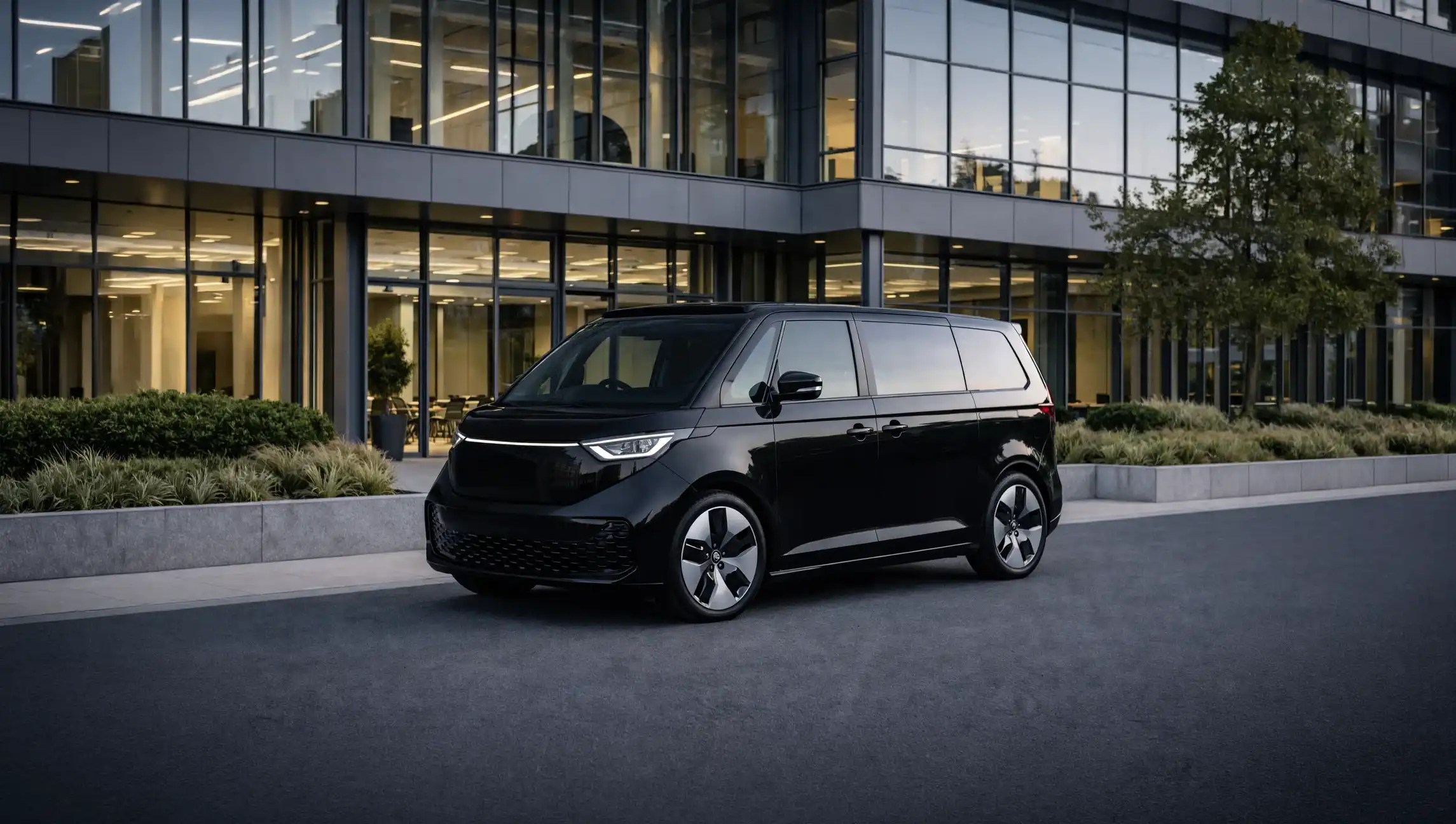
Electric car company car tax – what every company needs to know
Did you know that for a fully electric company car, you currently pay 0 HUF in company car tax? This in itself represents a significant saving, but it is by no means the only financial benefit that electric mobility offers to businesses. In terms of company car tax, electric cars are attracting the attention of more and more businesses – as much for environmental as for financial considerations.
On Voltie's blog, we regularly explore questions related to electric driving. In this article, we look at how tax conditions shape up if you were to build your company fleet from electric vehicles, and what laws, discounts, and considerations might influence your decision.
Using a company car can entail several types of tax obligations. Basically, you should keep the following areas in mind – and see how electric drive affects them.
Motor vehicle tax is governed by Act LXXXII of 1991. This tax basically depends on the vehicle's powertrain and environmental classification. In the case of electric cars, this is currently 0 forints – which in itself is a remarkable advantage over vehicles with traditional drivetrains.

If you use an electric car as a company or as an employee, it is worth being aware of the details of the regulations. One such issue is the question of billing, which is not as straightforward as in the case of traditionally powered cars – especially if the vehicle is used for mixed, i.e., both private and business purposes. You can read about this in more detail in our blog post on charging reimbursement.
Government regulation is continuously matching market developments and points in a clear direction: it aims to encourage a complete transition to electric vehicles. For plug-in hybrids, the previous exemption is being phased out, so higher tax rates must be expected for these henceforth. Purely electric cars, however, continue to receive more favorable treatment – with respect to all three types of taxes examined. It is therefore worth staying up-to-date so you can react to the changes in a timely manner.
Tax type | Fully electric car | Plug-in hybrid |
|---|---|---|
Company car tax | HUF 0 | payable from 30 November 2026 for vehicles registered after 1 January 2025 |
Motor vehicle tax | HUF 0 | no data |
Registration tax | HUF 0 (5E and 5Z) | not exempt from 1 January 2025 |
Property acquisition duty | HUF 0 | not exempt from 2025 |
Company car tax
Under the old system, company car tax had to be paid on any vehicle used by a company for private or mixed purposes. Based on KöHÉM Decree 6/1990, electric cars have enjoyed full exemption so far – and this remains unchanged. However, an important exception is that for plug-in hybrid vehicles registered after January 1, 2025, company car tax must be paid starting from November 30, 2026.
If you are considering a company car fleet, it is worth knowing that electric cars are in an outstandingly favorable position from a tax perspective. In summary:
Company car tax: 0 HUF – as opposed to the monthly tax rate payable for petrol or diesel cars
Motor vehicle tax: 0 HUF – for traditional cars, this value can be up to tens of thousands of forints per year
Registration tax: 0 HUF – exclusively for fully electric (5E) and zero-emission (5Z) cars
Property acquisition duty: also zero – for zero-emission vehicles
If you are considering electric vehicles at a corporate level, it is worth being forward-thinking and taking into account the total cost of ownership (TCO) beyond the initial price. Due to the tax exemption, other discounts, and the difference between charging and refueling, maintaining an electric car will become cheaper over time than a diesel or petrol one.
Registration tax and fee exemption
From January 1, 2025, an important change came into effect regarding the taxation of green-plate cars. While plug-in hybrids were previously exempt from registration tax as well, according to the new regulation, this discount now only applies to fully electric (5E) and other zero-emission (5Z) cars. The same applies to the transfer tax: from 2025, only truly zero-emission vehicles – i.e. purely electric cars – are exempt from the property acquisition tax.
Frequently asked questions
Not on a fully electric car, the exemption remains in place. This does not apply to plug-in hybrids.
Would you like a quote for your charger?


